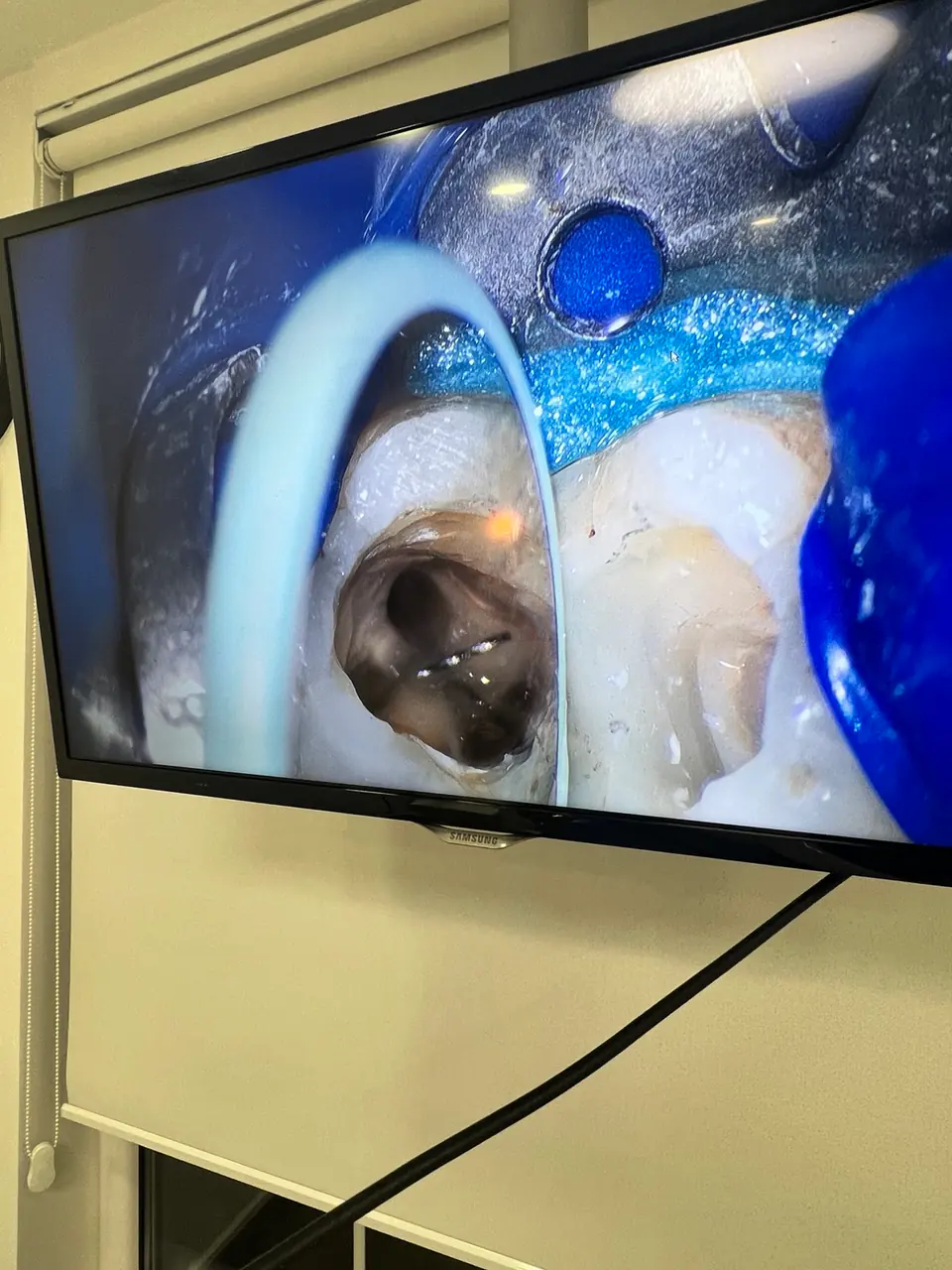
When is a treated tooth reassessed?
Persistent or renewed pain, tenderness on chewing, swelling or drainage from the gum, and a non-healing radiographic finding may require further assessment. A finding discovered during a routine review may also need comparison with previous records.
Not every radiographic change represents active disease, so clinical examination and follow-up are important.
Why can previous treatment fail to heal?
Possible causes include untreated anatomy, microbial leakage, a defective restoration, new decay, inaccessible areas within the canal system or a crack. Before retreatment, the long-term restorability of the tooth is also considered.
How is retreatment performed?
When suitable, the existing restoration and canal filling materials are removed in a controlled manner. The canal system is explored, cleaned and disinfected again before filling and restoration are planned.
Depending on the findings, observation, surgical endodontic treatment or another restorative approach may be considered instead.
Frequently asked questions
Does every painful treated tooth require retreatment?
No. The bite, surrounding tissues, neighbouring teeth, periodontal causes and possible cracks should be assessed before deciding.
Can every root canal be retreated?
No single answer applies to every tooth. Remaining tooth structure, anatomy, previous procedures and long-term restorability guide the decision.